Instructions
Follow the steps and taste along the way.
Braise the cabbage with the apple
Cut the cabbage into thin strips, finely chop the onion, and dice the apple. Heat 10 ml of the oil in a pot and cook the onion for 3 minutes, until softened. Add the cabbage, apple, vinegar, sugar, thyme, 3 g of the salt, and 100 ml of the water. Stir, cover, and braise over low heat for 25–30 minutes, stirring occasionally. The cabbage should soften while retaining a little bite.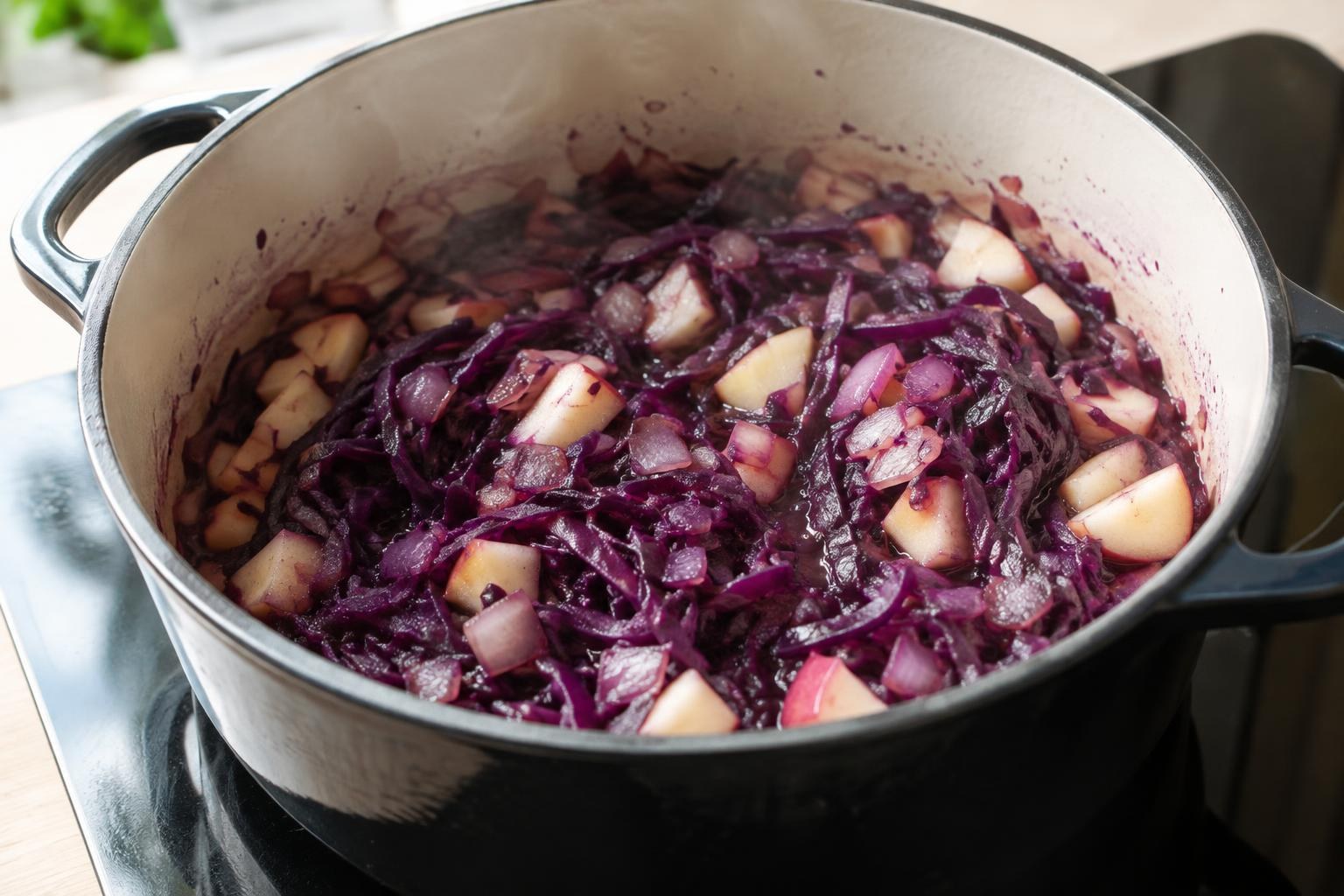
Cook the buckwheat
Rinse the buckwheat in a sieve and let it drain. Toast it in a small pot without oil for 2–3 minutes, until it becomes lightly fragrant. Pour in 480 ml of the water, season with 3 g of the salt, and bring to a boil. Cover, reduce the heat, and cook for 12–15 minutes, until the water has been absorbed. Remove from the heat and leave covered for 5 minutes, then fluff with a fork.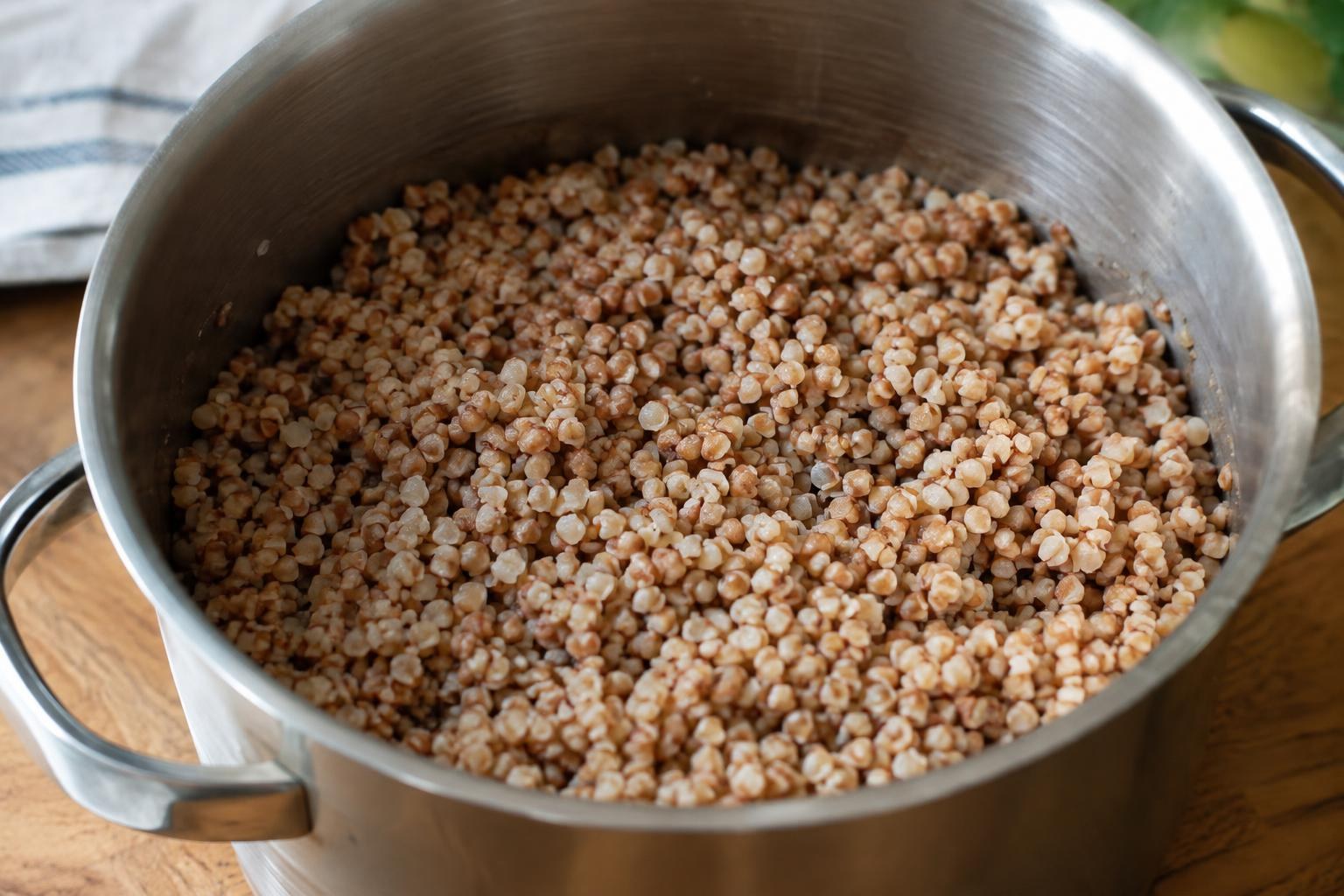
Sear the tenderloin
Pat the tenderloin dry and cut it into medallions about 3 cm thick. Season with the remaining 3 g of salt and the black pepper. Heat the remaining 15 ml of oil in a large frying pan over medium-high heat. Sear the medallions for about 2 minutes on each side, and briefly on the edges if needed. Check with a thermometer: the center should reach 63 °C. Transfer the meat to a plate and let it rest for 3–5 minutes.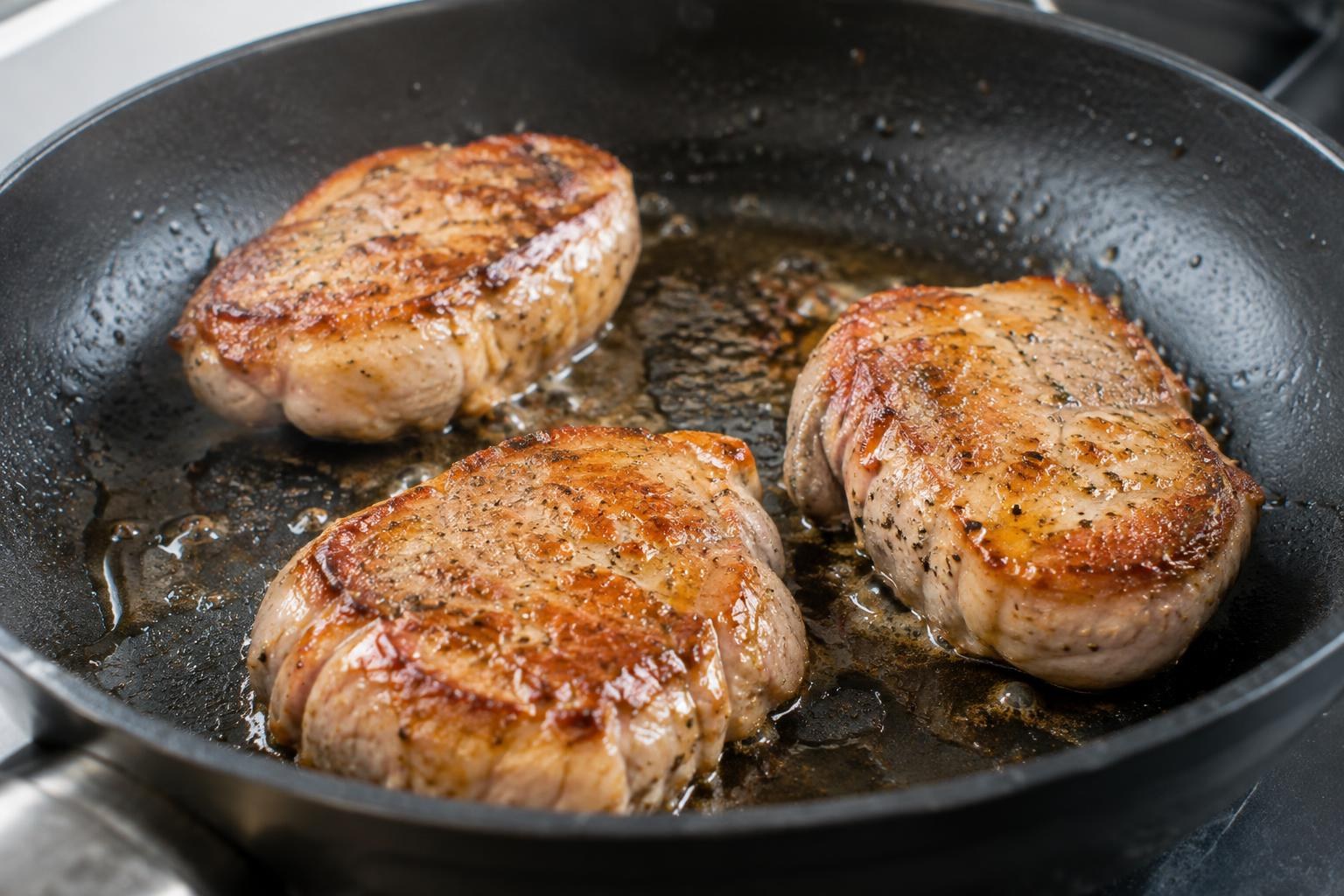
Finish the apple pan sauce
Remove excess fat from the pan, leaving the browned bits on the bottom. Pour in the apple juice and stir to loosen the browned bits. Let it bubble gently for 4–5 minutes to reduce slightly. Stir in the mustard and any juices that collected while the meat rested. The sauce should be smooth, distinctly apple-flavored, and gently tangy.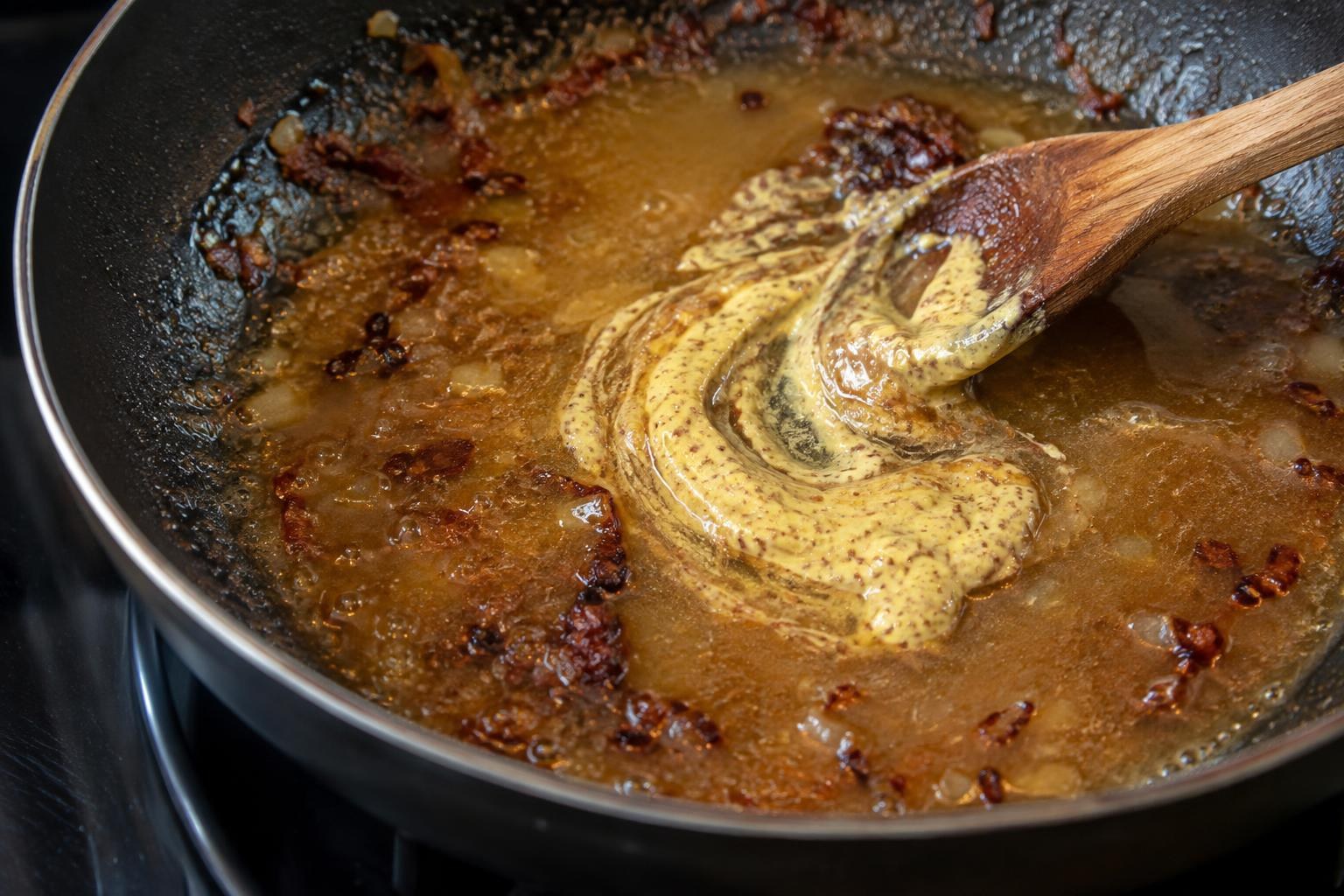
Serve
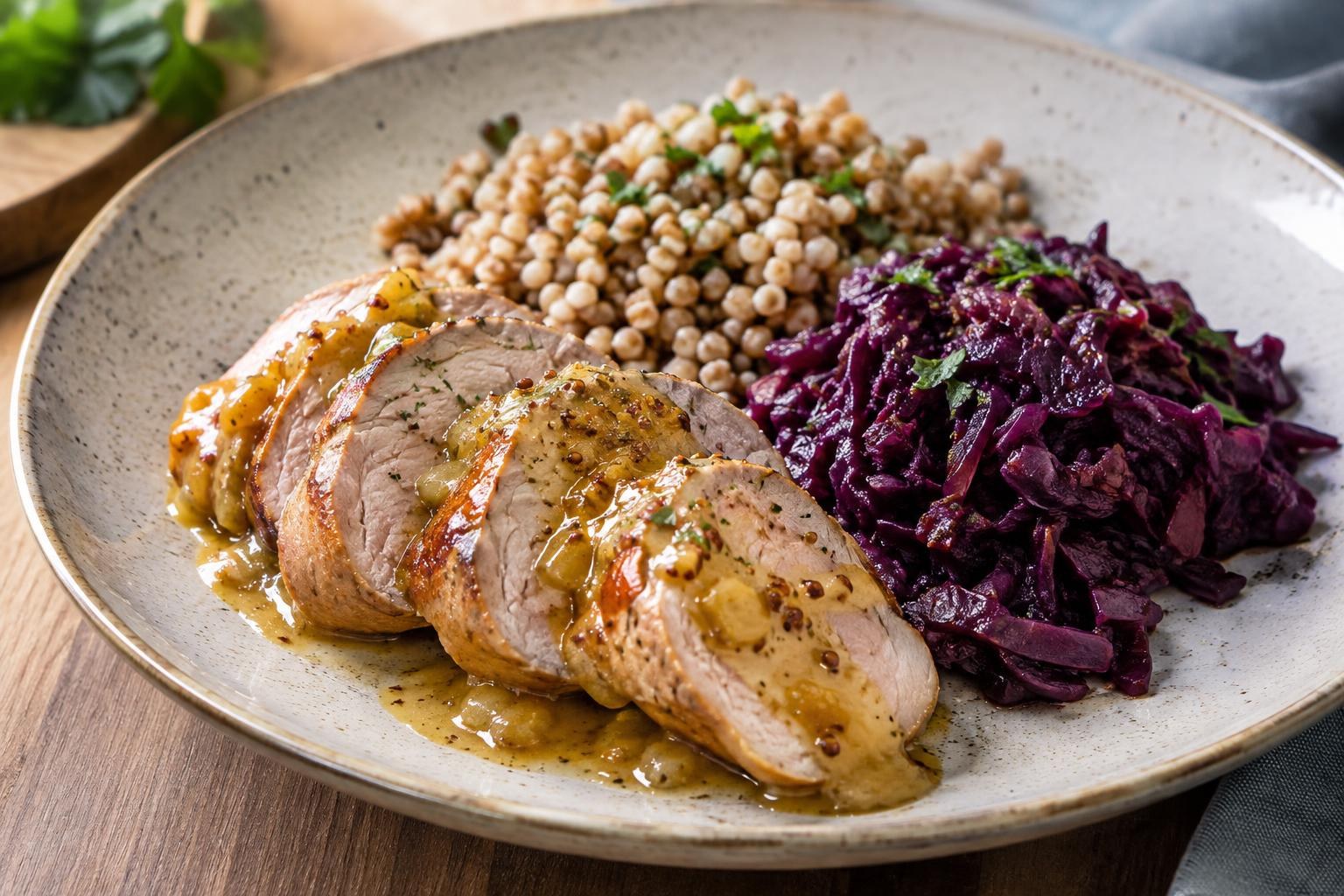
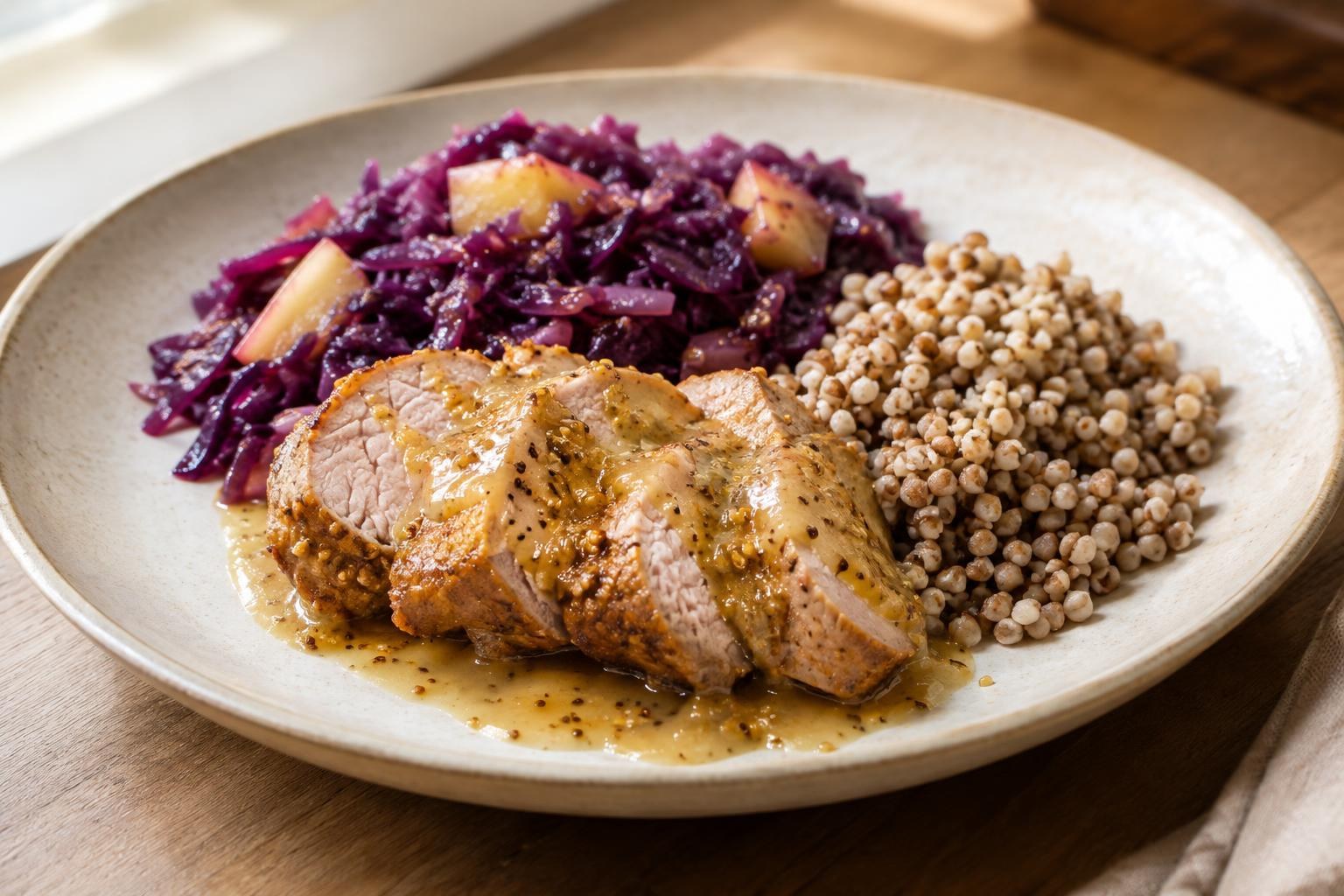
Divide the buckwheat and braised cabbage among plates. Add the tenderloin medallions and drizzle with the mustard pan sauce. Serve immediately while the meat is warm and the buckwheat is fluffy.